
Accounting & ERP
MYOB.
Keep your ledger. Connect the floor.
Keep MYOB as your financial system and connect the warehouse records your team needs.
Responsibilities
Agree where each record belongs.
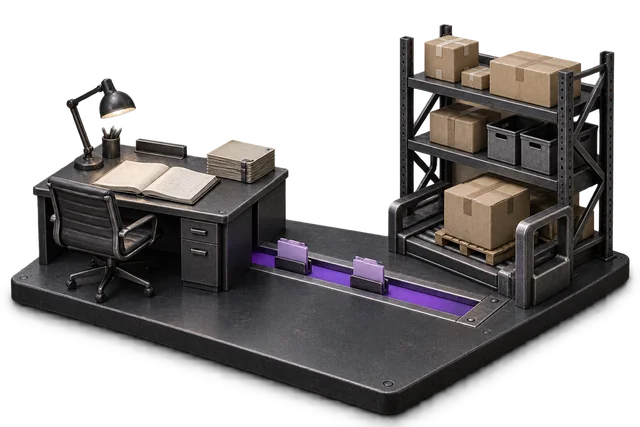
Agree which system owns each record. A two-way integration does not mean every record can be edited in both places.
What flows where
Scope the records in each direction.
These are proposed flows for scoping, not a promise that every object or event is already supported.
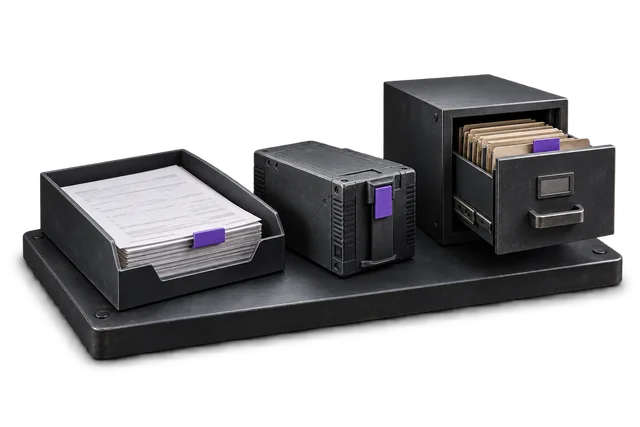
| Record | From → to | Trigger | Scope note |
|---|---|---|---|
| Customers and suppliers | MYOB → OpsUI | Agreed during scoping | Proposed flow. Account-level support must be confirmed. |
| Item master records | MYOB → OpsUI | Agreed during scoping | Proposed flow. Account-level support must be confirmed. |
| Chart of accounts (read-only) | MYOB → OpsUI | Agreed during scoping | Proposed flow. Account-level support must be confirmed. |
| Tax codes and tax rates | MYOB → OpsUI | Agreed during scoping | Proposed flow. Account-level support must be confirmed. |
| Sales invoices and credits | OpsUI → MYOB | Agreed during scoping | Proposed flow. Account-level support must be confirmed. |
| Payment events and remittance data | OpsUI → MYOB | Agreed during scoping | Proposed flow. Account-level support must be confirmed. |
| Inventory movements and adjustments | OpsUI → MYOB | Agreed during scoping | Proposed flow. Account-level support must be confirmed. |
| Customer record updates | OpsUI → MYOB | Agreed during scoping | Proposed flow. Account-level support must be confirmed. |
Set up the connection around your operation.
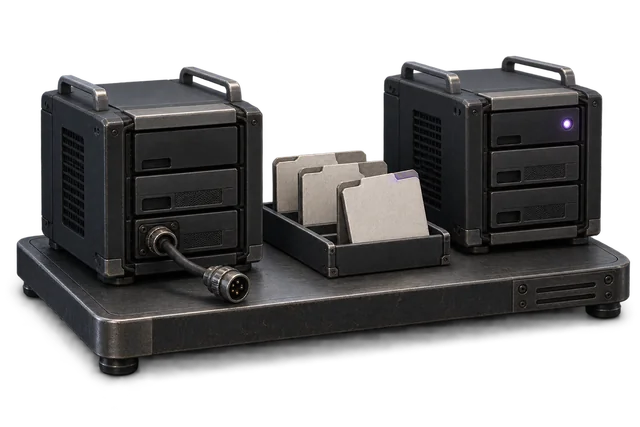
Confirm access
Confirm your MYOB product, version and account access.
Agree the mapping
Agree record ownership, field mapping and the initial data load.
Test the handoff
Test successful updates, rejected records, duplicates and recovery before enabling production.
Questions about MYOB.
Is the MYOB connector self-serve today?
Not yet. It is built into your rollout and wired against your MYOB tenant during onboarding. The rest of OpsUI runs standalone alongside MYOB in the meantime.
Does it work with AccountRight and MYOB Business?
Both. The connector targets whichever MYOB product you run, AccountRight Live or MYOB Business, confirmed during scoping.
Do I have to leave MYOB?
No. MYOB stays your finance system of record. OpsUI adds the warehouse and dispatch layer and syncs back to MYOB.
What are the inventory limits in MYOB AccountRight, and how does OpsUI fix them?
MYOB AccountRight handles costing and on-hand quantity well, but it has no real multi-location warehouse control, no barcode picking, no batch / lot / expiry tracking, and bills of materials only in the Premier tier. OpsUI adds those as operations modules on top of MYOB: barcode receiving and picking, multi-location bins, batch tracking, and carrier dispatch via Australia Post, StarTrack and Sendle. MYOB stays your finance system of record.
Should I move to MYOB Acumatica, or add an operations layer to MYOB?
If your pain is operational, things like picking errors, no warehouse visibility, manual dispatch, drifting stock accuracy, a full migration to MYOB Acumatica is often a heavier, slower project than the problem needs. Adding OpsUI as a modular operations layer keeps your MYOB ledger and your accountant's workflow in place and gets the warehouse running in weeks. If you genuinely need full mid-market financials (multi-entity, advanced general ledger), Acumatica may be the right call.
Your next step
Bring your system. Map the connection.
Share the account or version you use, the records that matter and the exceptions your team needs to handle.